

Analysis & Case Studies
Expert Comparison: ISO 27001 vs NIS2 in 2026
Information security management has transitioned from a recommended best practice to a strict regulatory requirement. In 2026, the corporate sector faces the necessity to align its processes with new European regulations. In this context, a crucial question frequently arises: ISO 27001 vs NIS2 – how do these two frameworks compare, and which should be the priority for your business?
The NIS2 Directive has introduced new standards for cyber resilience across the European Union, bringing severe financial penalties and direct liability for senior management. Simultaneously, the international standard for information security retains its position as the most reliable methodology for risk prevention. In this analysis, we will objectively examine the ISO 27001 vs NIS2 paradigm and explore how both systems function synergistically.
Strategic Takeaway: If your organization falls under the scope of the NIS2 directive, implementing a certified Information Security Management System (ISMS) covers over 90% of the technical and organizational requirements dictated by the law.
Defining the Scope: ISO 27001 vs NIS2
To build a sustainable corporate strategy, it is necessary to clearly distinguish the two concepts regarding their legal and operational nature.
- The European Directive (NIS2): This is a mandatory legal framework for EU member states. It covers specific critical sectors (energy, healthcare, transport, digital infrastructure) and requires strict incident reporting within tight deadlines (up to 24 hours), as well as ensuring business continuity.
- The International Standard (ISO/IEC 27001): This is a voluntary, globally recognized framework based on best practices for risk management. It provides a systematic approach to protecting the confidentiality, integrity, and availability (CIA) of corporate information by establishing an ISMS.
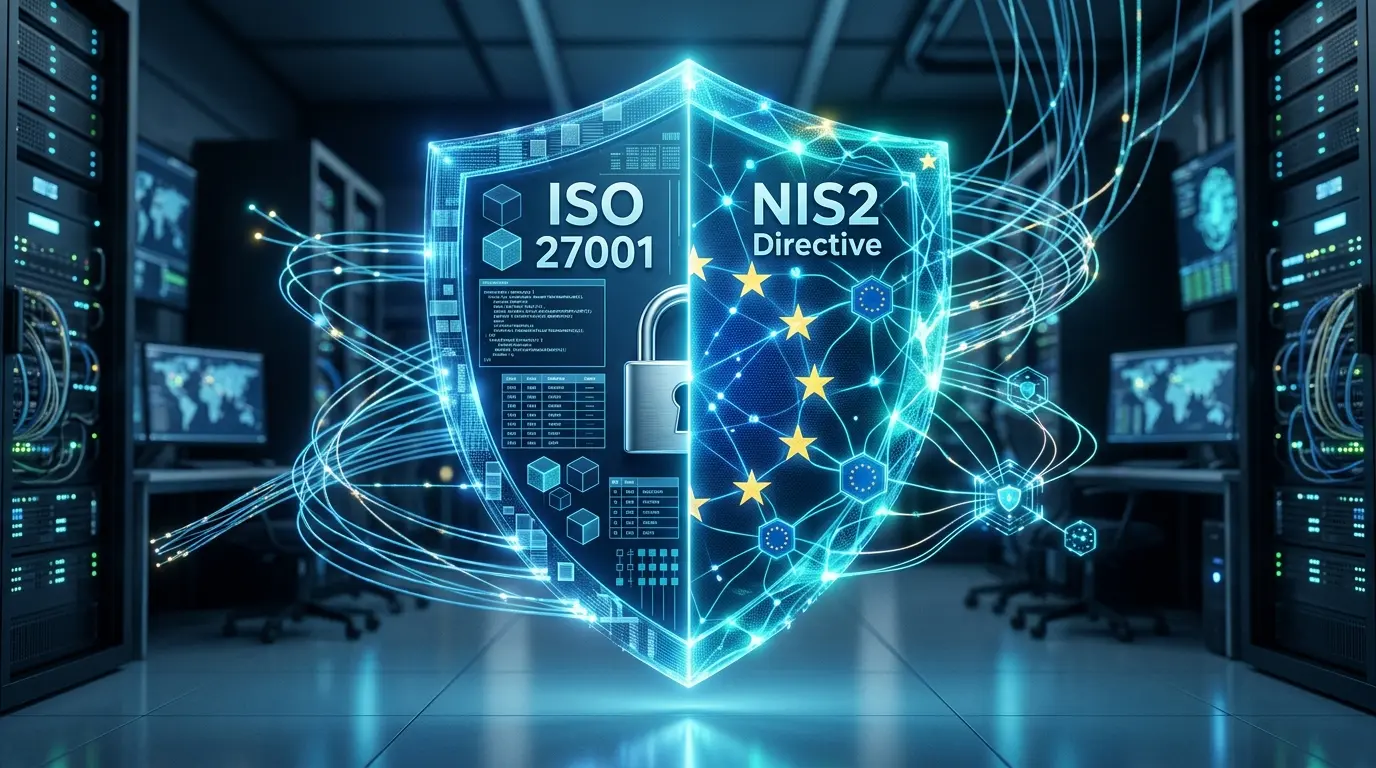
Structural Comparison: ISO 27001 vs NIS2
The following table systematizes the main differences and commonalities between the two security frameworks:
| Evaluation Criteria | ISO/IEC 27001 (Standard) | NIS2 (European Directive) |
|---|---|---|
| Legal Status | Voluntary (often required by B2B contracts) | Legally mandatory for entities in scope |
| Non-compliance Penalties | Loss of certification, breach of contracts | Financial fines up to €10 million or 2% of global turnover |
| Primary Focus | Protection of information assets (CIA Triad) | Network resilience, rapid reporting, supply chain security |
| Management Responsibility | Ensuring resources and commitment to the system | Direct administrative liability for security failures |
Practical Integration of Both Systems
Analyzing the topic of ISO 27001 vs NIS2 reveals that they are not mutually exclusive; rather, they complement each other. The directive defines what results must be achieved, while the international standard provides the specific architecture and procedures through which these results can be realized.
Organizations that already maintain a certified ISMS have established processes for risk assessment, data encryption, and access control. This significantly facilitates passing the regulatory audits required by national cybersecurity authorities.
The Compliance Process
For companies categorized as essential or important entities under the directive, the following action plan is highly recommended:
- GAP Analysis: A detailed audit of the current IT infrastructure against the legal requirements.
- Policy Updates: Integrating specific procedures for reporting incidents to national CERT teams.
- Supply Chain Management: Implementing mandatory security criteria for all subcontractors and software vendors.
- Certification Audit: Validating the implemented measures through an independent accredited certification body.
Conclusion
Implementing adequate security measures is an investment in the stability of your business processes. Examining the ISO 27001 vs NIS2 scenario proves that synchronizing the two frameworks is the most effective approach to minimizing legal and operational risks. The “Dimitrovi Standart” team is at your disposal for expert consultations and assistance in building a comprehensive information security system.
Frequently Asked Questions
Does the ISO certificate automatically cover NIS2 requirements?
Not automatically 100%, but it covers the vast majority of technical requirements. The standard provides the necessary organizational measures, but the company must additionally integrate procedures for mandatory incident reporting to national authorities within 24 hours.
Which companies are required to comply with the directive?
The directive is mandatory for medium and large enterprises operating in over 18 critical sectors (including healthcare, energy, logistics, food production, IT services). Small enterprises may also fall within the scope if they provide a critical service to the region.
What is the timeframe for building an ISMS?
Depending on the scale and complexity of the organization, the process of designing, implementing security policies, and training staff usually takes between 3 and 6 months.